Table of Content
- No commute, and fewer hours worked
- Those Who Switched to Telework Have Higher Income, Education and Better Health
- Remote working saves employees more than $4,000 per year
- Remote jobs have grown more than ten times in a decade
- Work From Home Statistics You Should Know
- The Truth About Work-From-Home Productivity
Retail managers would be able to plan and report from home but still need to work from the retail site some days of the week. Stress is a major factor to your bottom-line productivity, and 82 percent of remote workers report lower levels of stress when working from home. Maybe it’s the comfort of your home environment, maybe it’s not dealing with traffic, or maybe it’s not having to wear pants. Having clear goals set up for each employee, project, or task is the first and best way to track remote employees’ productivity. This requires planning on your part, but it will result in increased independence for your workers and a better feel for their productivity levels for you.

Another possible reason for improved productivity is improved happiness and satisfaction at work, as evidenced by the fact that staff attrition rates drop by 50%. Not only does less staff churn mean more work but it means less time having to advertise and interview for jobs, as well as less time training new employees to do their work. It is also believed that a further 10% of work could be done from home if necessary. If your team is fully remote, your business can likely fill roles 33 percent faster than your competitors. This affects the overall productivity of your team because it means you’ll be stuck with unfilled positions for much shorter periods of time, and you’ll spend far more time at peak teamwork and productivity.
No commute, and fewer hours worked
Having said that, we are going to discuss the top ten working from home statistics, which will show the significance of this concept. Canada owes the success of its statistical system to a long-standing partnership between Statistics Canada, the citizens of Canada, its businesses, governments and other institutions. Accurate and timely statistical information could not be produced without their continued co-operation and goodwill.

But the question that always burns in the minds of the employers is whether working at home increases employees’ productivity or not. The supporters of remote work claim that it provides unparalleled benefits of an open environment, flexibility, and higher satisfaction. On the opposite side, antagonists say that working from home leads employees to waste time due to lack of discipline and the absence of micromanagement. Footnote 6.Overall, 35% of all new teleworkers reported working longer hours per day while only 3% reported working shorter hours. Between workforce changes in response to the coronavirus pandemic and advances in communications technology, nearly half of employed adults in the U.S. now work remotely. In fact, almost twice as many employees now work from home compared to working at a physical office or other location (26%).
Those Who Switched to Telework Have Higher Income, Education and Better Health
The Coronavirus pandemic led to increased anxiety and stress in a lot of employees. It also saw children being kept home from school, and some houses had multiple people working from home. Of those that worked from home, 36% said that they found staying motivated to be challenging. 32% said that working without being interrupted was difficult.
Taking vacation days is still a good thing for mental health and overall productivity, but fewer unnecessary sick days should have a positive bottom line effect on productivity. The same study found that working remotely leads to sharply reduced employee attrition, due to higher work satisfaction. When people quit a job, it’s usually due to some level of dissatisfaction. One of the most famous studies about working from home and productivity is this one from Stanford, which monitored 16,000 employees over the course of several months.
Remote working saves employees more than $4,000 per year
“While many home-office technologies have been around for a while, the technologies become much more useful after widespread adoption,” the researchers note. Before the COVID-19 pandemic, Stanford’s Nicholas Bloomwas bullish on work-from-home trends. Alex, the Chief Executive Officer of a 900-employee SaaS company, wanted to figure out his future work arrangements. He feared that if his team didn’t return to the office full time, he would lose out to rivals who could do so and gain productivity benefits by working from the office.
Other 41% say they have made somewhat more changes than usual. And these changes are not limited to incorporating online team communication tools. Communication and collaboration are the biggest struggles for more than 20% of remote workers.
Remote jobs have grown more than ten times in a decade
The space should be comfortable, away from added screens (TV, Xbox, etc.), and have everything you need to complete your work. Reports from surveys taken in the past couple of months show working from home is producing a better turnaround on projects, and increasing productivity. Working from home has gotten easier and communication software is getting better. The same study also shows an entire “office” will underperform if they each work from home. Each individual will put in the same amount of work as the next.
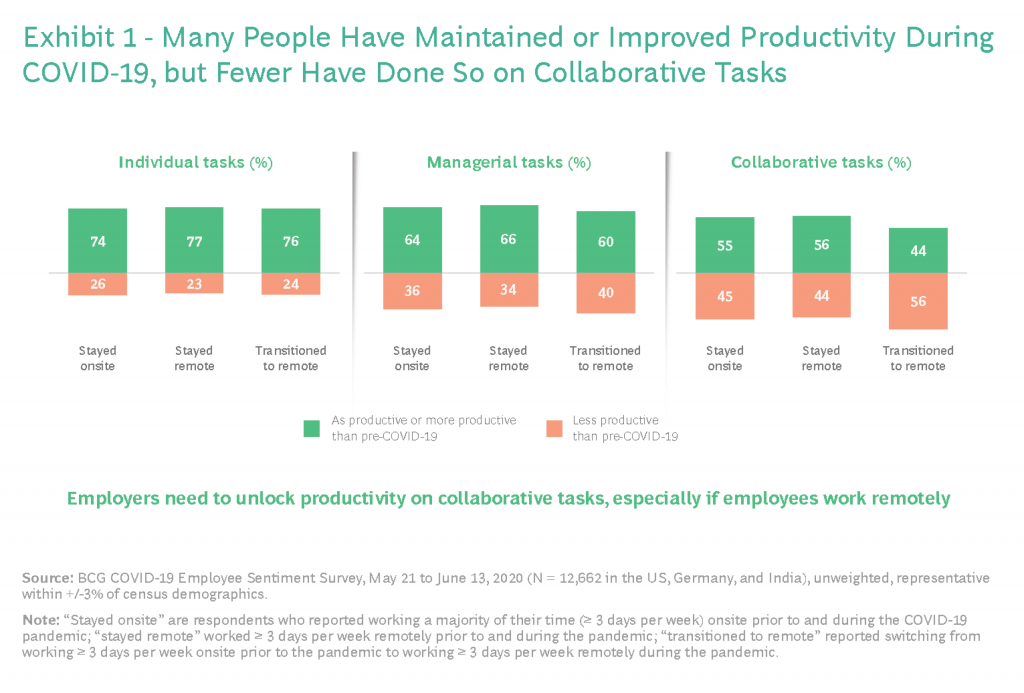
Employers reasoned that remote work was beneficial for their staff and that it reduced the cost of commuting while also giving the employee extra free time. In fact, work-from-home employees are typically 13% more productive, 25% less stressed, and perform 22% better than their office counterparts. Not only that, but the lack of commuting has also saved the collective workforce 62.5 million hours per workday. Take a break.Taking regular breaks allows your brain to refocus and relax. In the Airtasker survey, 37% of the remote workers say taking regular breaks is the best way to stay productive. Use your break to get a snack, drink water, get fresh air, or check on your family.
OpenVPN suggests that, 54% of IT professionals think that remote workers are a greater security risk. As soon as workers are not on-site, it becomes much more difficult to have control over the organization’s security infrastructure. Companies need to take steps to prevent data leaks and similar issues. Another more recent study states that the more hours an individual works from home, the less productive they become. Those who worked full time (8 hours/day) at home are 70% less productive than those who don’t work from home. This is one of the reasons why remote working can, in many instances, boost employees’ productivity.

84% say they are happier working remotely than working as in-office employees. Furthermore, 40% of full-time workers that worked from home would take a pay cut of up to 10%, and about 37% would take a pay cut of more than 10% — to be able to work from home after the pandemic. Even in 2019, 62% of respondents said they had worked some time remotely, while as much as 50% said they work remotely at least once a week. Only 1 in 10 organizations have offered subsidies to the employees for managing the costs of working remotely. The advent of technology confirmed that remote work is possible and destined to happen. In fact, remote work has been on an upward trend for close to two decades, but once the pandemic hit, remote work became a reality of many businesses overnight.


No comments:
Post a Comment